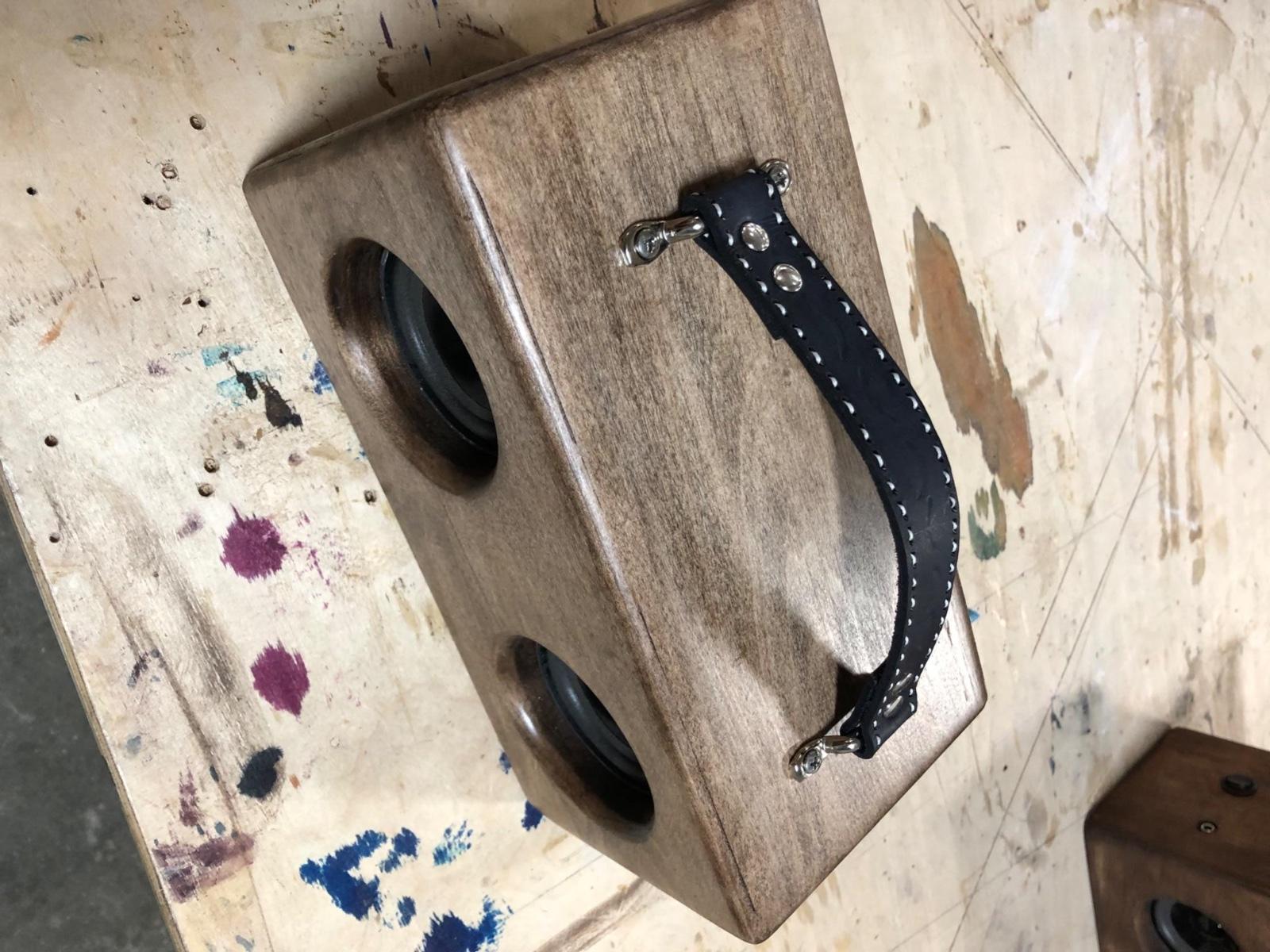
Bluetooth Speaker
A portable Bluetooth speaker built from raw hardwood, with the driver, amplifier, and battery layout resolved in Fusion before any cut so the internal hardware and the power-switch and charging-port cutouts would register on the panels. The cabinet was cross-cut from 30-inch stock, mitered at 45°, glued, and stained. The drivers, switch, and amplifier were soldered into a single audio chain across eight conductors, with the amplifier board and battery bonded to the interior walls.
Objective & Constraints
The objective was to take a portable Bluetooth speaker from raw hardwood lumber to a finished, working product. The governing problem was packaging: the drivers, amplifier, battery, power switch, and charging port all had to fit within the cabinet volume, and the external cutouts had to clear the internal hardware and land cleanly on the panel faces.
Hand fabrication set the secondary constraints. Every panel was cut, bored, glued, and finished by hand, so the layout had to be verified up front rather than corrected by trial fitting, and the rear panel had to stay removable for electronics installation before the cabinet was finally closed.
Drafting
The enclosure was modeled in Fusion ahead of fabrication. The model fixed the positions of the drivers, amplifier board, and battery and confirmed adequate clearance for each within the interior volume. Cutouts for the power switch and charging port were located against the model so they cleared the internal hardware and registered correctly on the walls, and panel dimensions and miter angles were taken directly from the model so the physical build followed a verified layout.
Fabrication
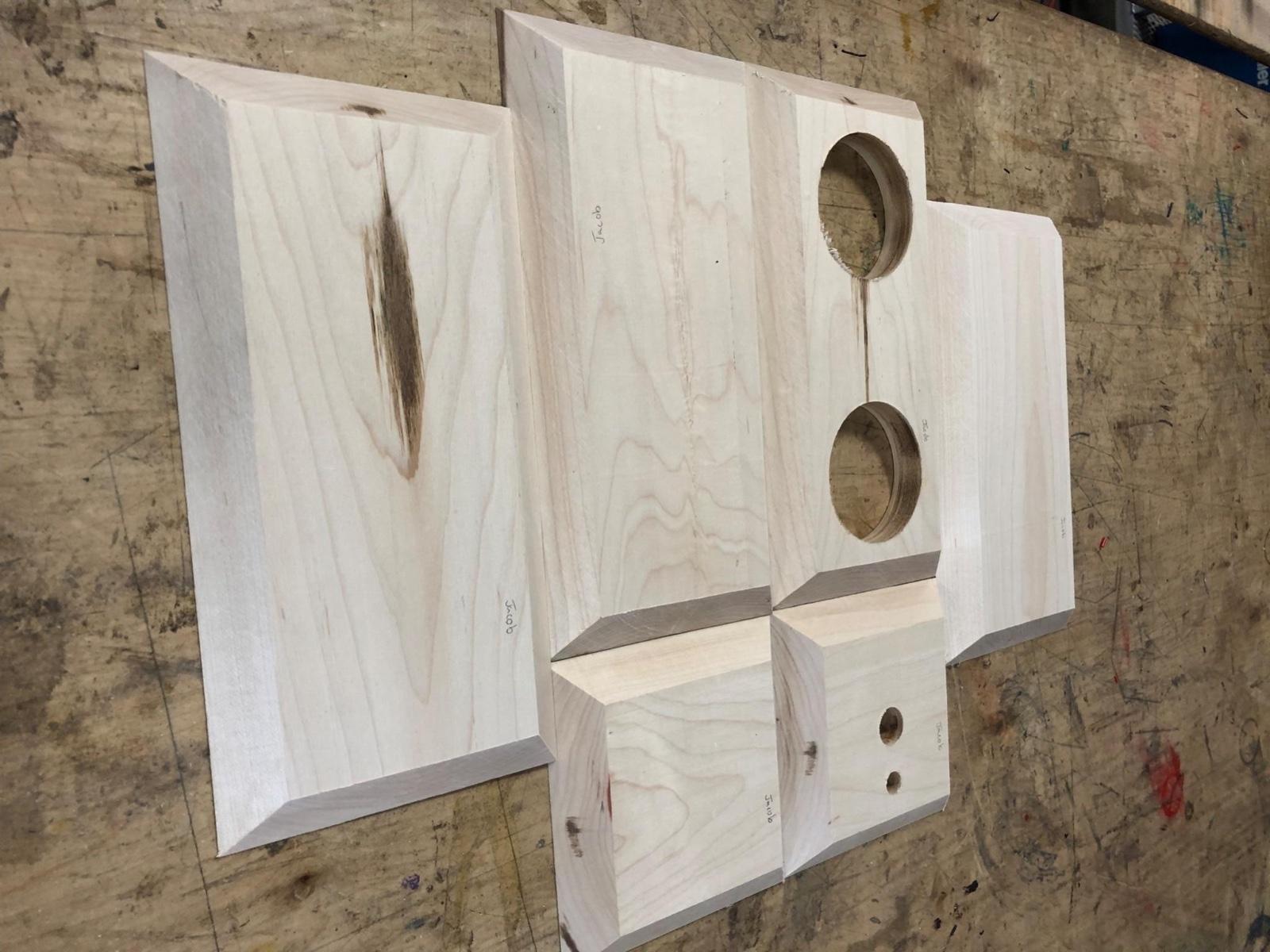
Stock was cross-cut to 30 in on a chop saw and surfaced through a planer to bring both boards to a uniform panel height. The cabinet walls were then dimensioned on a table saw and miter saw, with the panel edges mitered at 45° so the corners closed into a continuous box rather than meeting at exposed end grain.
- Driver openings were bored on a drill press.
- Holes were drilled for the power switch and the charging port.
- Mounting holes were drilled for the rear panel.
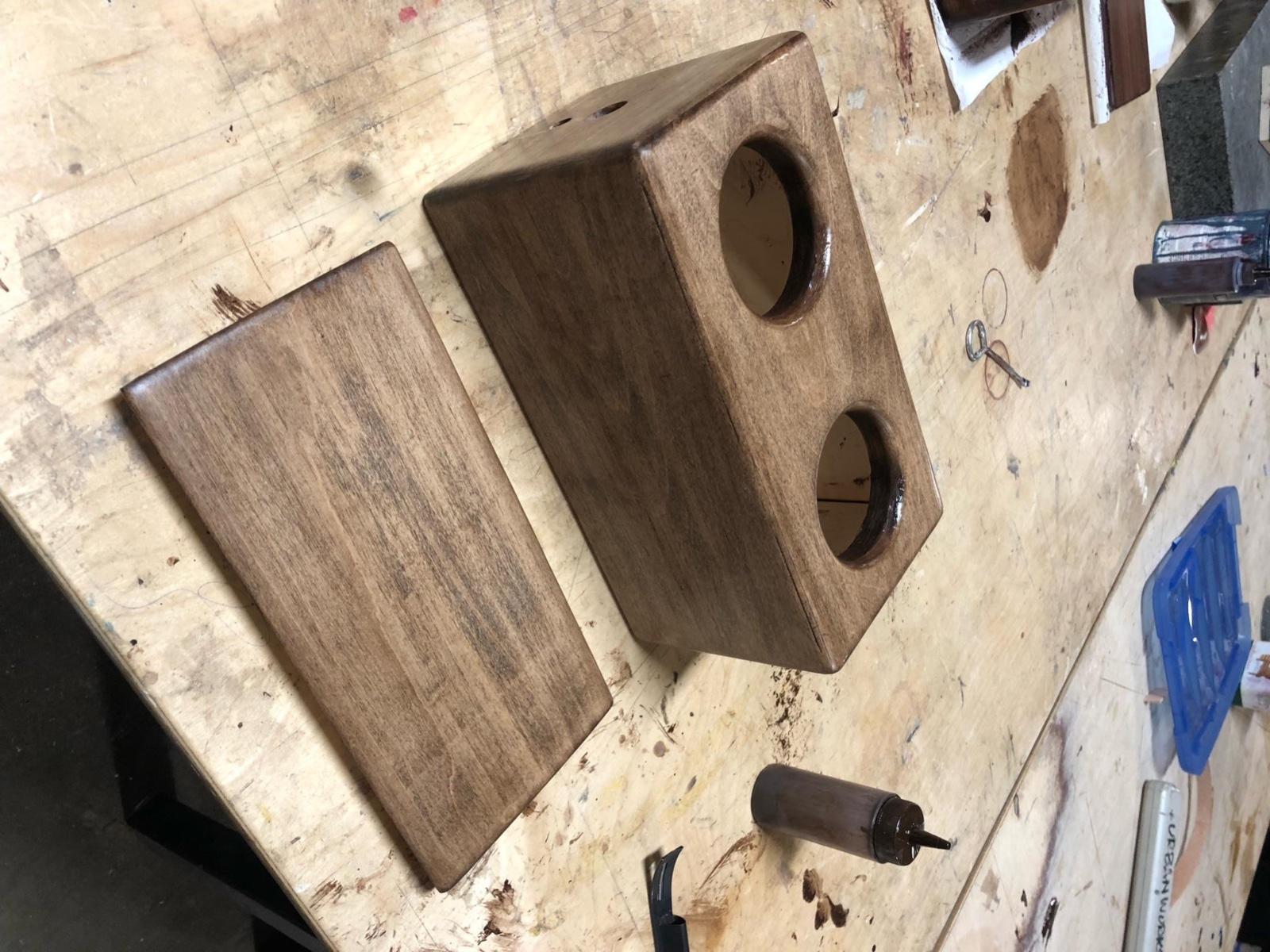
All walls except the rear panel were glued and clamped, with tape applied to hold the joints square while the adhesive cured. Edges were rounded over with a router, joint gaps were closed with wood sealer, and the faces were leveled with an orbital sander. Three coats of stain were applied to seal and color the wood.
Assembly
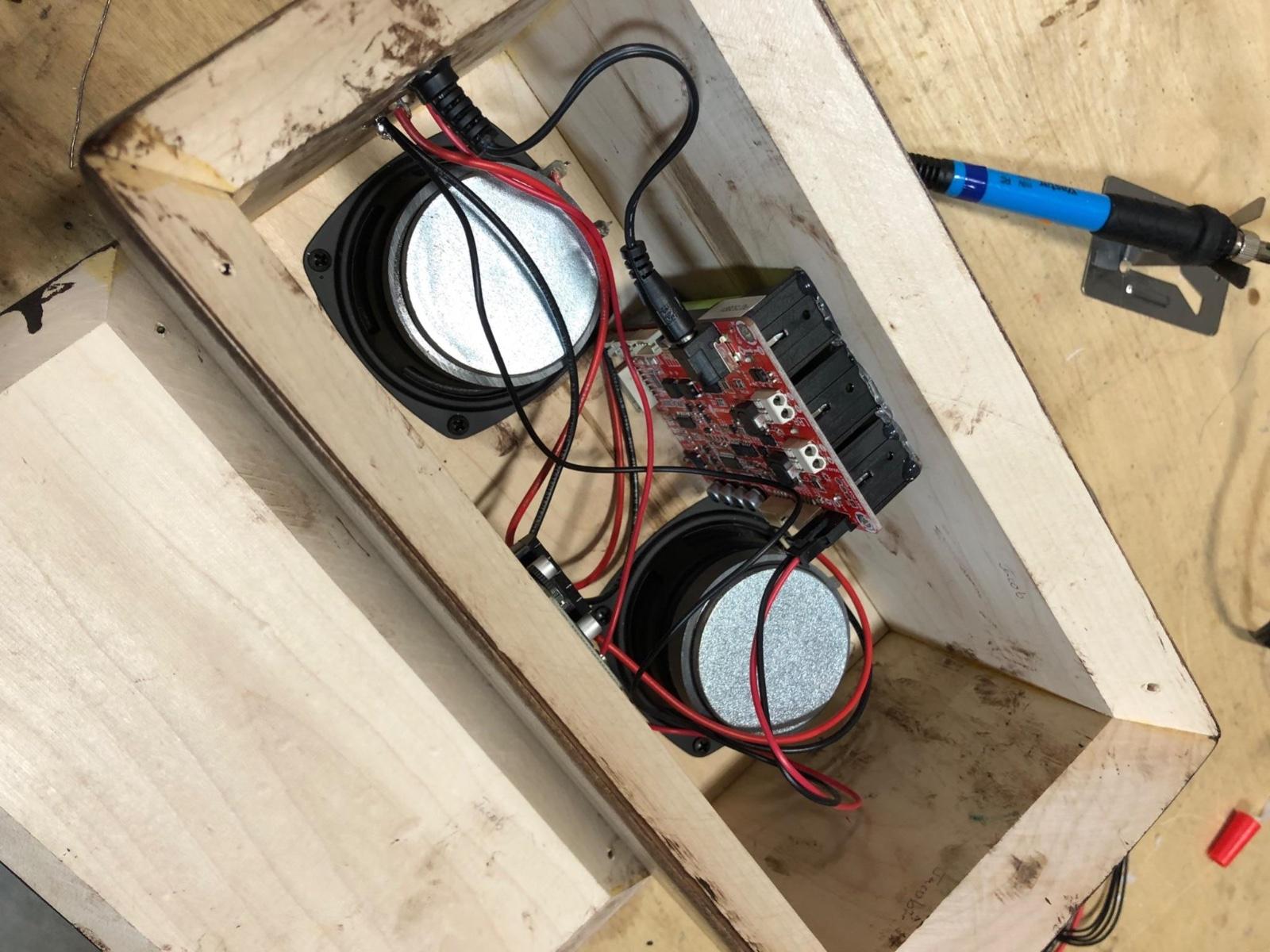
Eight conductors were cut, stripped, and soldered to join the drivers, switch, and amplifier into a single audio chain. The drivers were seated in their cutouts, and the amplifier board and battery were bonded to the interior walls in their planned positions, securing the mass against vibration. Fastening the rear panel closed the cabinet, enclosing the drivers within the interior volume the model had set aside.