
EV3 Robot with Shiftable Gearbox
A FLL robot on a Mindstorms EV3 platform, programmed in Python and built around a rigid cube chassis selected from three compared variants. A shiftable gearbox let the drivetrain change gear ratio to trade speed for torque as each mission required, and calibrated reflected-light sensors followed printed field lines for more accurate travel than dead-reckoning. Earned 2nd in Robot Design and 3rd in Robot Performance at the regional Championship.
Objective & Constraints
The season’s missions required taking task attachments on and off the robot quickly between autonomous runs, while still crossing the mission field accurately and at speed. The design problem was a chassis that made attachment changes fast and repeatable without giving up driving precision.
All control ran on a single LEGO Mindstorms EV3 platform programmed in Python, using the motors and sensors that platform provides. Runs were judged on both how reliably the robot completed its missions and how quickly it moved between them, so neither accuracy nor speed could be traded away for the other.
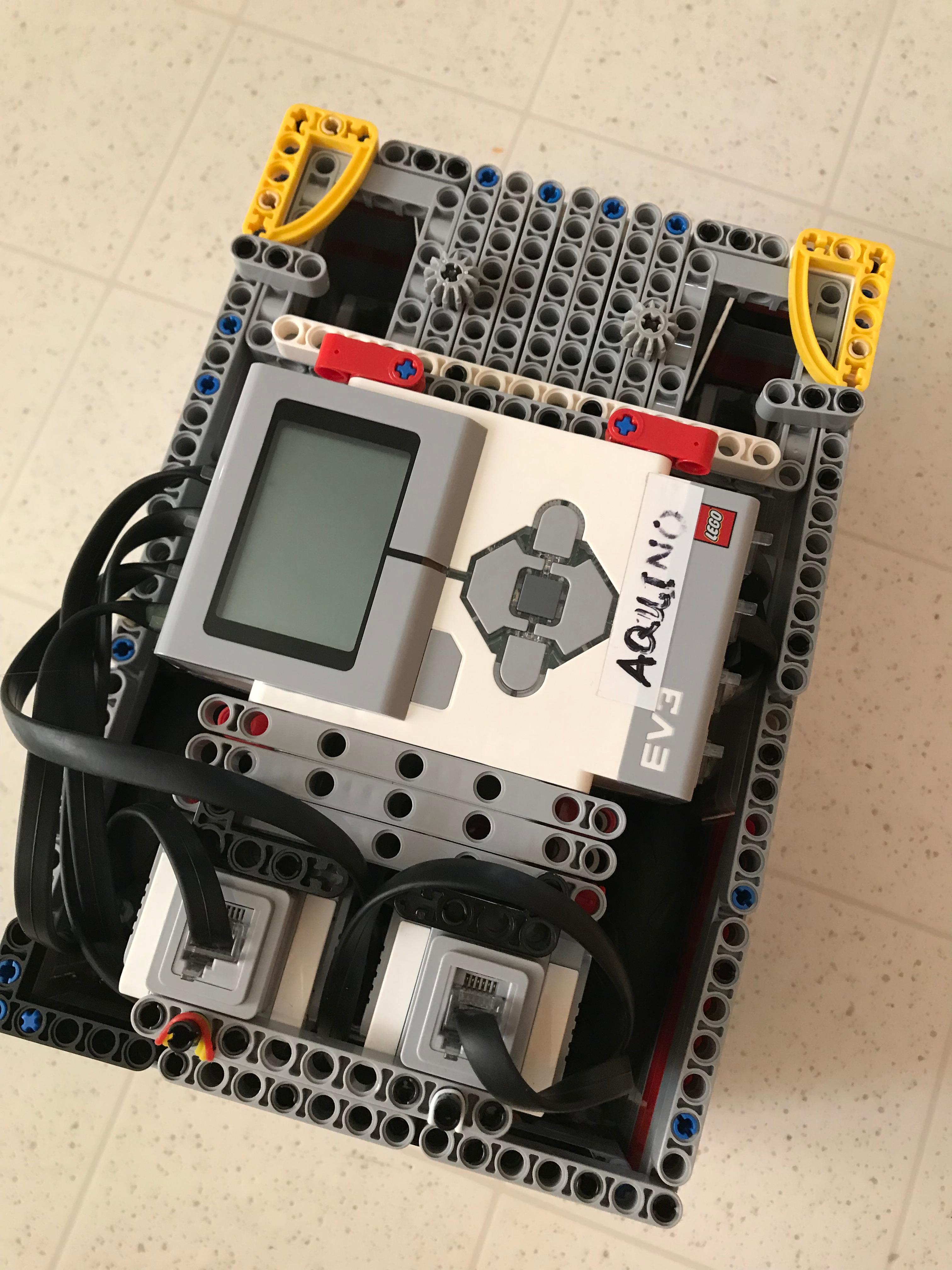
Architecture
A rigid, cube-shaped chassis, the “box robot,” was selected over a lighter open frame. The closed faces gave fixed, repeatable mounting points, so attachments could be seated and removed quickly between runs. The cube also stiffened the structure around the drivetrain and wheel mounts.
A frame that resists flex keeps the wheels aligned, which is what lets the robot turn predictably and hold a straight heading from one run to the next.
Prototyping
Three chassis variants were built and compared before the box configuration was chosen. The variables evaluated across them were:
- Wheel size.
- Gear type and number of gears.
- Gear location.
- Motor placement.
The drivetrain was built around a shiftable gearbox, a gear-shifting mechanism that let the drive motors change their ratio rather than run a single fixed reduction. This let one drivetrain serve two competing demands: a faster ratio for covering ground between mission sites, and a higher-torque ratio for missions that needed more pushing force.
Motor placement and mass over the driven wheels were set to hold traction and limit slip.
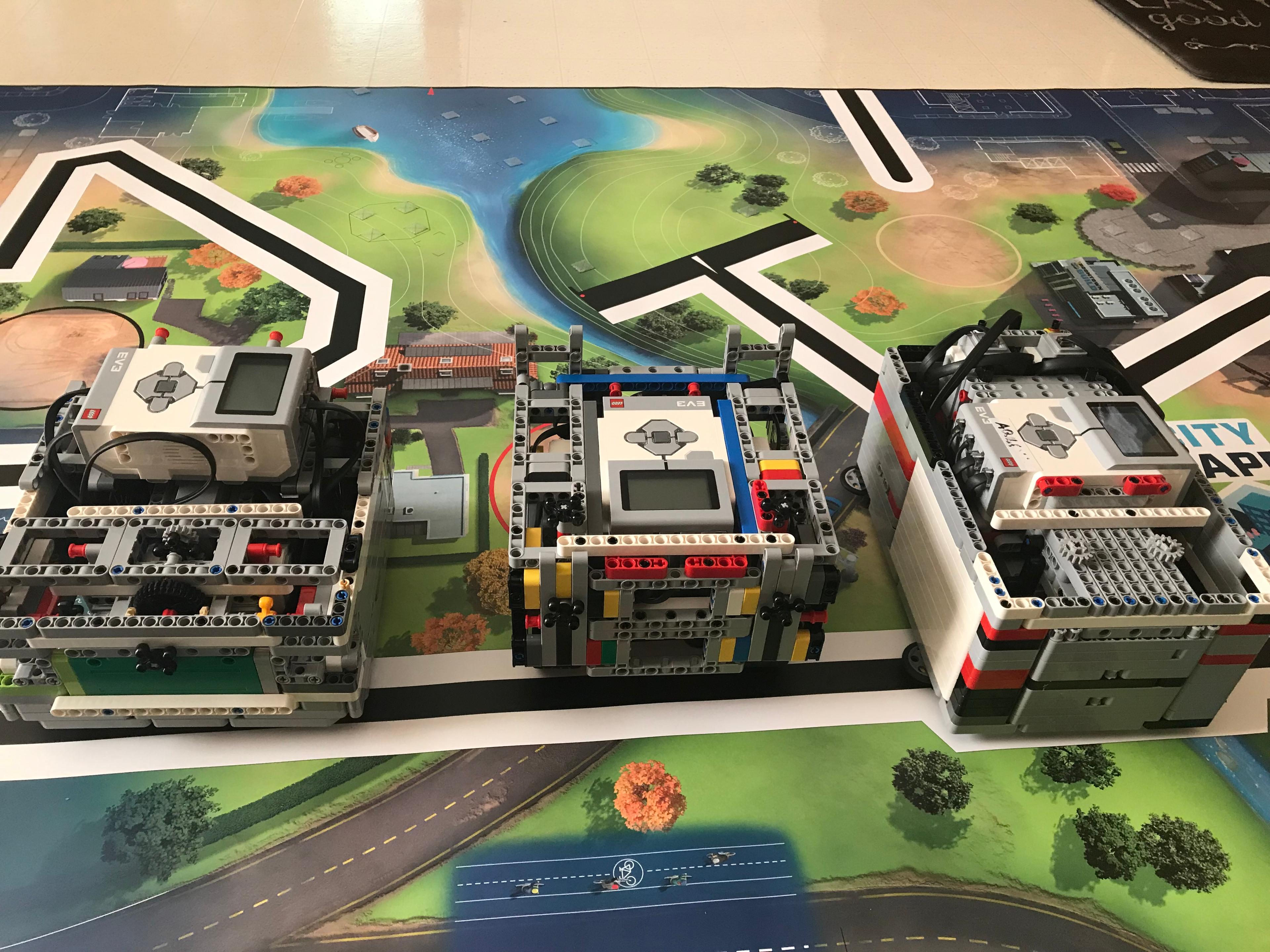
Navigation
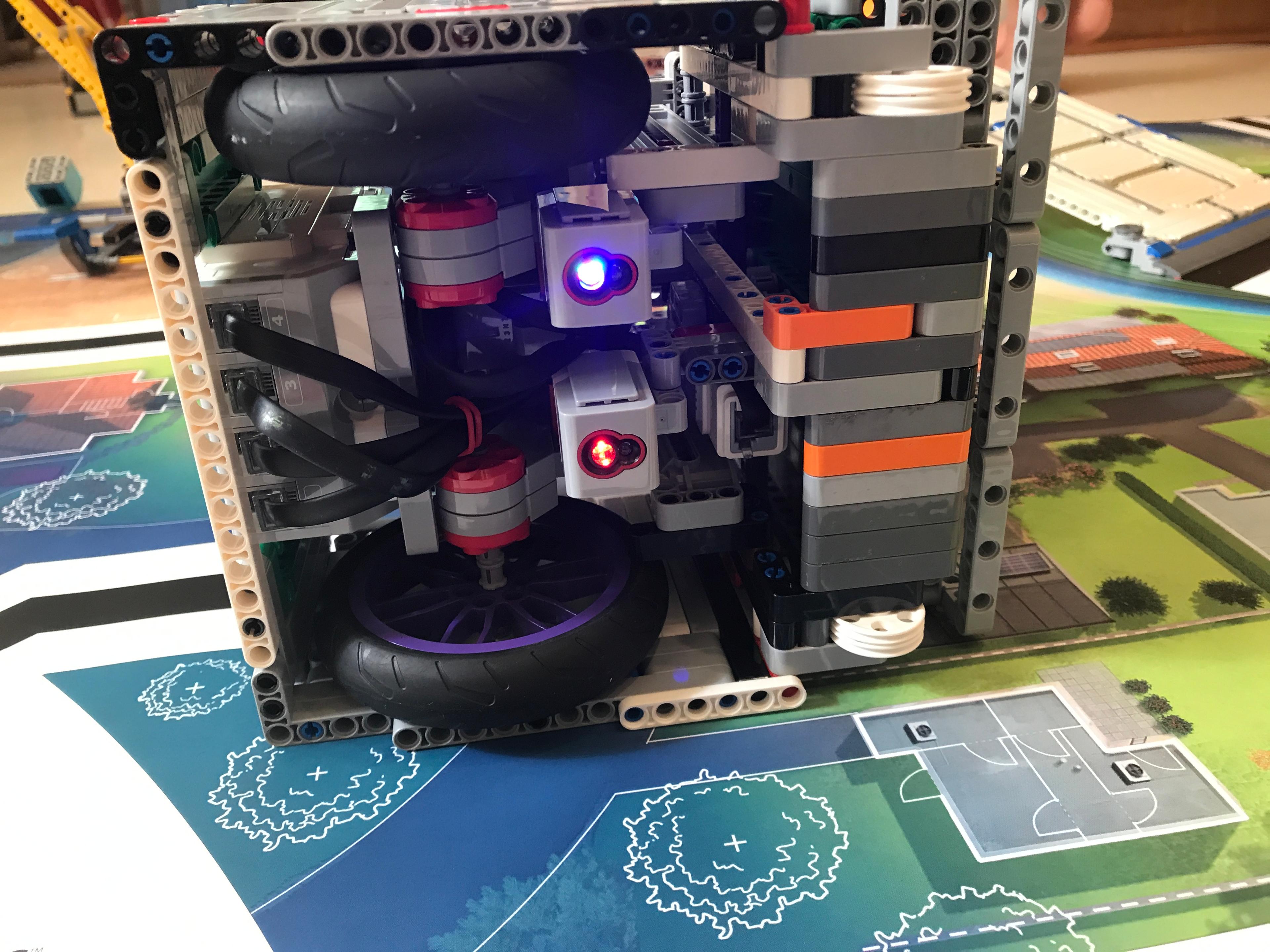
Reflected-light sensors read the lines printed on the field and followed them between mission sites. This replaced dead-reckoning, which accumulates heading and distance error from wheel slip, with a line reference the robot could correct against, giving faster and more accurate travel.
The sensors were calibrated to the field’s light and dark contrast, and the chassis was reinforced so behavior stayed consistent run to run. Python was used to troubleshoot the sensors and to sequence the autonomous runs, and mission timing was rehearsed and refined through testing.
Results
The completed robot navigated the field autonomously and earned 2nd in Robot Design and 3rd in Robot Performance at the regional Championship of the 2020 FLL Challenge season. The chassis design, build, and field tuning were carried out hands-on, across roughly six months from first concept to competition.